
Passaic County Previous Residents Sources
Start an address history with the newest record that can be tied to the parcel, then move backward one dated source at a time. Recorded deeds establish a transfer trail. Passaic County Historical Society (PCHS) directories put names at an address in selected years. Federal census schedules add a dated household record after the federal release period, while Sanborn maps establish the building footprint rather than its people. Newspapers and probate records can explain a departure, sale, or estate event. Each source has its own coverage and access route.
| Historical source | Era covered | Where held | Address-history value |
|---|---|---|---|
| PRESS property index | December 1, 2000 to present, as stated | County Clerk online | Recorded transaction index and current instrument trail |
| PRESS deed and mortgage images | January 1, 1989 to present, as stated; conversion continues | County Clerk online | Recorded image and instrument details, not a certified title result |
| Registry Vault and Record Room | Older records; exact earliest boundary not stated in the inspected material | County Clerk record-room route | Older deed-book and title-work fallback |
| PCHS local directories | 1856 through selected 1968 volumes | PCHS library | Dated address listings and directory context |
| LOC address guides | Passaic-area guidance for 1971-1976 and 1979-1999, with noted gaps | Library of Congress reference holdings | Later address-to-name research leads |
| Federal census | Released under the federal 72-year rule | Archives, microfilm, and census collections | Household details at the census date |
| Paterson Sanborn maps | 1887, 1899, and 1915 local editions identified | Library of Congress online | Structure, use, material, and nearby footprint context |
For recent previous residents, begin with the parcel and deed trail. For an older house, begin with the oldest reliable printed address and keep every directory date. A blank interval is a gap in the available source, not proof that no one was present.
Preserve Passaic County Addresses
Copy an old address exactly before modernizing it. A directory may abbreviate the street, show an older municipal label, or use a number that no longer appears in the same form. Next, build a small continuity record with the printed address, normalized address, municipality at the time, block and lot, parcel ID, directory volume, deed book/page, census year, newspaper citation, and a confidence note. This preserves the link between the historical paper trail and the current parcel without pretending they are automatically identical.
Block, lot, qualifier, tax map, legal description, nearby house numbers, and a Sanborn intersection can bridge a suspected mismatch. Do not claim a particular countywide street-renumbering year: the research did not locate a definitive official chronology. County and municipal changes can also alter labels. Passaic County began in 1837 from Bergen and Essex, so a pre-county record may belong in a parent county. Clifton replaced Acquackanonk Township in 1917, and Haledon replaced Manchester Township in 1908. Search the jurisdiction printed at the time, then carry the result forward carefully.
Passaic County Deed Chain
A deed chain is an ownership trail, not a list of everyone who lived at an address. Start with the current parcel record and follow the recorded transfer backward through the current grantee and earlier grantors. The legal description is the control point. It is more stable than a street number when a parcel was split, merged, or relabeled. PRESS is useful for the online part of the sequence; the Registry Vault, Record Room, and a qualified title-search route are the older-record fallback.
- Record the current parcel's municipality, block, lot, qualifier, owner of record, property location, and legal-description clues from the tax or parcel record.
- Search PRESS for the current transfer using party names and the legal or parcel context. Save the date, consideration, book/page, grantor, grantee, and instrument type.
- Search the seller as a prior grantee and compare the earlier instrument's legal description to the same parcel.
- Repeat one transfer at a time. If the parcel description changes, use the tax map, subdivision record, or adjoining-owner information before continuing.
- When online access ends, move to the County Clerk's Record Room or Registry Vault route rather than assuming the chain ended.
- Grantor
- The party who conveys an interest in the recorded instrument.
- Grantee
- The party who receives that interest. A current grantee can lead to the prior transfer through the seller.
- Chain of title
- The sequence of recorded transfers used to track an interest in the same parcel over time.
- Legal description
- The land identity used in the recorded record. It often carries the chain when a street address changes.
Note: The County Clerk says its online system is not a title search, so a complicated chain needs the Record Room or other appropriate title-work route.
PRESS Passaic County Cutoffs
The online dates are useful boundaries, but they are not a claim that older county records vanished. PRESS states that its index begins December 1, 2000 and its electronic deed and mortgage images begin January 1, 1989, with older backfile conversion continuing. A missing web result can therefore mean that a physical book or image has not been converted, that the search terms need an address or legal-description variation, or that the record is held through the older Registry route.
If the parcel is owned by a named entity, New Jersey business-record copies and status reports can be a separate filing lead. It may identify entity filing information, officers, managers, agents, or filing addresses, but it does not establish who lived at the parcel.
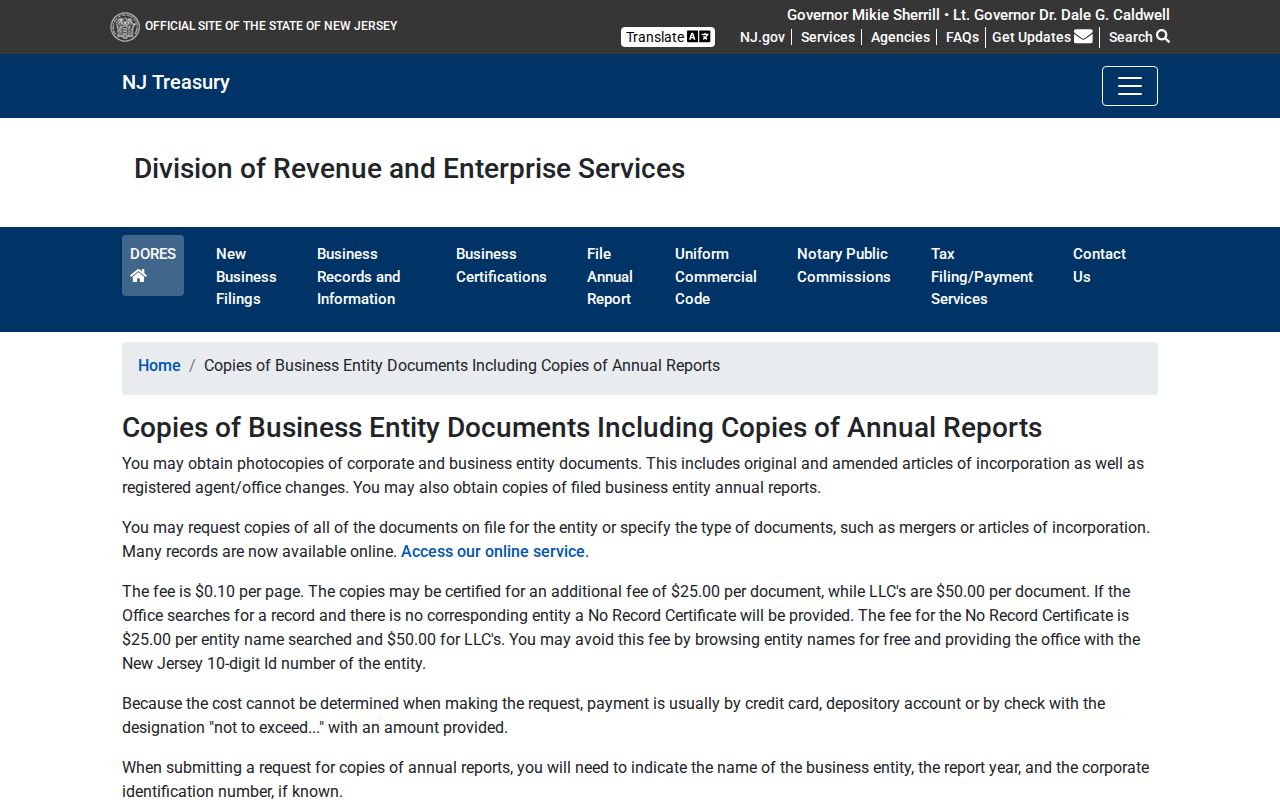
Keep any entity result as a distinct recorded-filing clue and return to the parcel's deed and directory evidence for address history.
Passaic County Directory Gaps
The PCHS directory shelf makes its gaps visible, which is essential for work on previous residents. It holds Ray's Paterson Directory for 1856 and 1856-57, Paterson and Passaic combinations from the nineteenth century, and changing multi-municipality runs through the twentieth century. The 1901 through 1909 sequence has no listed 1908 item. Later Paterson runs also omit 1951, 1953, 1955, 1957, 1959, 1961, 1963, and 1965 through 1967. A directory year absent from the documented shelf cannot be reconstructed from the book before or after it.
The 1915 through 1920 Paterson volumes use pink pages for streets, house numbers, and occupants. The suburban volumes from 1956 through 1961 have pink street pages and green telephone pages, but they cover suburban municipalities rather than Paterson. For holdings, abbreviations, and research access, use the Passaic County Directory Book rather than treating the street section as a complete historical collection.
When a directory has no listing, try the next documented volume, PCHS newspaper microfilm, a census release, and the recorded parcel trail. Mark the missing source rather than turning silence into an answer.
Passaic County Address Guides
The Library of Congress street-address guide gives a later address-to-name method for Passaic-area criss-cross work. The research identifies coverage guidance for 1971 through 1976 and 1979 through 1999, with gaps in 1980 and 1990. Use the guide to identify possible address-directory access and volume questions, then confirm the holding and the address entry itself. A criss-cross result is a dated directory clue, not a substitute for a deed or current parcel record.
The Library of Congress street-address directory guide provides the source view used for this Passaic County previous residents research.
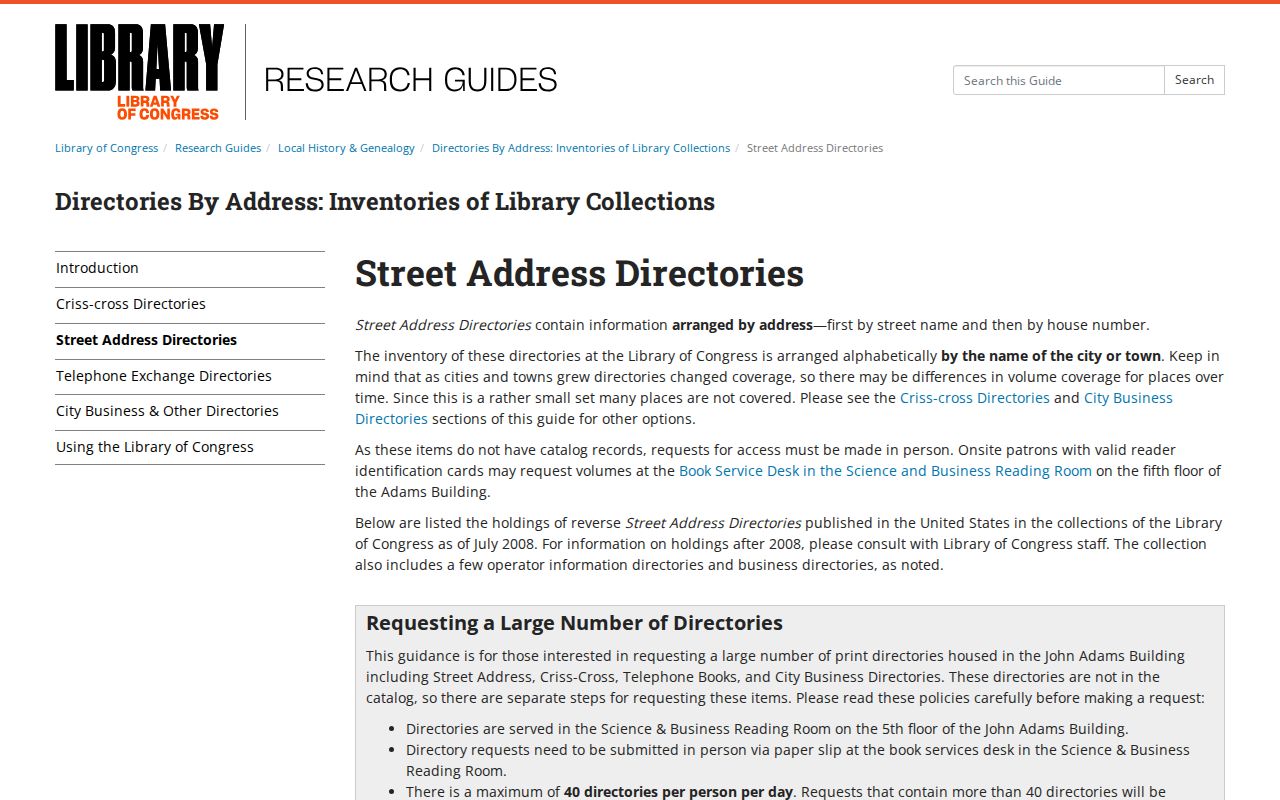
The guide supports an address-first search approach and helps separate a genuine volume gap from a search that simply needs a different street form.
For the building itself, the Library of Congress Paterson Sanborn collection has identified 1887, 1899, and 1915 editions. A Sanborn sheet can show footprint, material, use, story count, and nearby structures. It does not name people who lived there.
Passaic County Previous Residents Trail
Ownership is only one layer of a house history. Pair the deed chain with the closest available directory date, then add a released federal census schedule where the date permits. PCHS newspapers can then test the timeline for a sale notice, obituary, legal notice, or address reference. The PCHS microfilm inventory includes the Paterson Morning Call from 1889 through 1901, the Clifton Leader/Morning Leader from 1942 through 1969, and the Hawthorne Press from 1930 through 1982, among many local runs. Search by date, surname, address, and venue together.
- Write the street and number exactly as it appears in the deed, directory, map, or clipping.
- Choose the nearest available PCHS or address-directory year and capture its volume, page, municipality label, and listing.
- Pair that year with the closest released census schedule, while recognizing that recent decades remain outside the federal release rule.
- Use a newspaper, probate record, or recorded transfer to explain a change between dated listings.
- Keep owner of record, historical listing, and household evidence in separate columns until a source directly connects them.
This process answers who lived here before with a dated sequence rather than a single undated name. It also keeps a property sale, address move, and household relationship from being inferred where the record does not state one.
Passaic County Probate Endpoints
When a deed chain reaches an estate or a historical household disappears from an address, probate can be the next source. The Passaic County Surrogate provides an estate-research request route, with the research listing a $10 written search request and separate copy, certification, and filing fees. A probate file may identify a decedent's last address, executor, heirs, and property disposition. It does not prove that every person named in the file lived at the earlier property.
The Passaic County Surrogate fee information is the official starting point for the request and copy route. Add the address, approximate death date, estate name if known, and the exact question to the request. Obituaries and PCHS microfilm can supply a date or place lead, but a legal death record follows the vital-records or Archives route.
Passaic County Previous Residents Limits
Previous-resident research has firm limits. A public parcel owner is not automatically a current or past occupant. A tax mailing address can belong to a fiduciary, lender, estate, or out-of-town entity. A directory listing is tied to its printed year, and a census schedule is tied to its census date. Never infer a full household from a parcel card, an image on a map, or a single recorded instrument.
Keep personal details to the minimum needed for family history, estate research, property history, civic context, or personal safety. New Jersey's Address Confidentiality Program and Daniel's Law can protect addresses, and voter-related redactions must be respected. If a record is protected or a source is silent, do not try to fill the gap with private information.
Lawful use. Use Passaic County address history for lawful personal, family, estate, property, and civic research. Do not use past-resident records to stalk, harass, intimidate, or harm anyone.
Note: Record the source, access date, address form, and confidence level for every historical finding so another searcher can check the same trail.